From September 11 to 13, 2026, the Plenary Meeting of the Medical Law Professional Committee of the Chinese Research Hospital Association and the 2026 Annual Academic Conference were held at the Pullman Nanchang Sunac in Jiangxi. Themed "Healthy China: Rule of Law and Compliance," the conference gathered medical institution managers, medical and health law scholars, experts from medical and health administrative departments and fellow lawyers to exchange views on new requirements of medical legal policies, new industry challenges and new compliance pathways.
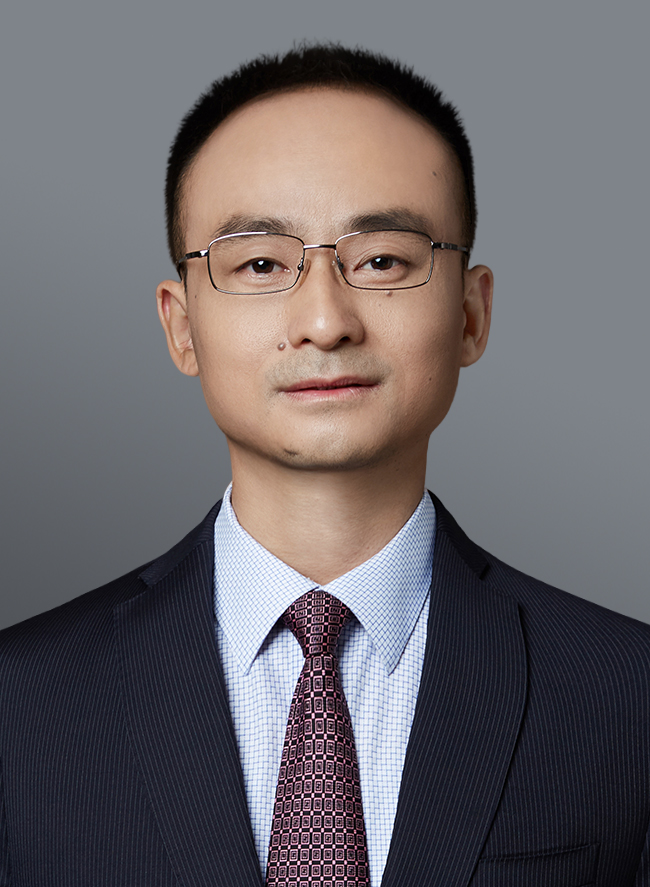
Llinks partner Mr. Yiguang Lu was invited to attend the conference and deliver a special sharing titled "Preventing Criminal Risks of Medical Insurance Fraud and Typical Case Analysis."
Llinks partner Mr. Yiguang Lu is a first-grade lawyer who has been awarded the honorary title of "Oriental Leading Lawyer." He has long focused on medical, pharmaceutical and medical insurance compliance and dispute resolution. He serves as legal counsel for the Shanghai Medical Products Administration, the Shanghai Municipal Health Commission and the Shanghai Municipal Bureau of Disease Control and Prevention. He also holds positions such as Deputy Director of the Medical and Health Law Professional Committee of the All China Lawyers Association, Member of the Advisory Expert Pool for Civil and Administrative Cases of the Supreme People's Procuratorate, and Member of the Administrative Reconsideration Committee of the Shanghai Municipal People's Government.
During the sharing, Llinks partner Mr. Yiguang Lu expanded on three levels: "Overview of Medical Insurance Regulation—Identifying Common Behaviors of Medical Insurance Fraud—Summary and Suggestions":
First, sorting out the regulatory posture of medical insurance funds. Combining data on prosecutions, concluded first-instance trials and fund recoveries in the national medical insurance field from 2023 to 2025, he pointed out that medical insurance regulation has entered a stage of "resolutely cracking down on fraud and insurance scams." Administrative penalties, criminal prosecutions and the convergence of administrative and criminal justice are advancing synchronously, and the compliance pressure faced by designated medical institutions and medical personnel has risen significantly.
Second, dismantling high-frequency behaviors of medical insurance fraud. Using the Guiding Opinions on Several Issues Concerning the Handling of Criminal Cases of Medical Insurance Fraud issued by the Supreme People's Court, the Supreme People's Procuratorate and the Ministry of Public Security as a clue, he systematically interpreted typical behaviors such as forging medical records to defraud medical insurance funds, fabricating medical service items and over-treating. Through adjudication cases such as Du Moujun altering inspection reports to defraud medical insurance funds and Ai Mouzhong et al. inflating medication and bed usage to defraud medical insurance funds, as well as practical controversies involving forged medical records, unqualified treatment and over-treatment, he focused on discussing issues highly concerned by frontline institutions. These included "whether forging medical records causes fund losses," "whether there is a purpose of illegal possession," "how to distinguish between general violations and fraud/insurance scams," and "how to soundly identify over-treatment."
Third, proposing compliance governance suggestions. Combining his practical experience in participating in legislative seminars and industry rule formulations, Llinks partner Mr. Yiguang Lu suggested that medical institutions and pharmaceutical enterprises accelerate the establishment of medical insurance compliance internal control systems. He promoted the shift from "post-event response" to "pre-event prevention, process record-keeping, anomaly early warning and administrative-criminal risk isolation," and called on the industry to further form guiding documents for preventing medical insurance violations and fraud/insurance scams, safeguarding the security of medical insurance funds and the high-quality development of medical services through the rule of law.
Attendees believed that this sharing bridged judicial adjudication rules, regulatory law enforcement logic and medical institution management scenarios. With detailed cases, clear boundaries and strong operability, it holds direct reference value for research hospitals and various designated medical institutions in preventing criminal risks associated with medical insurance.
In the future, Llinks will continue to rely on its compliance and dispute resolution experience in the "three medicals" (medical treatment, pharmaceuticals and medical insurance) to provide forward-looking and implementable legal services for medical institutions, pharmaceutical enterprises and regulatory authorities, assisting "Healthy China" to advance steadily on the track of the rule of law and compliance.