On July 31, the Leadership Transition Conference and Seminar on Digital Court Construction of the Shanghai Law Society Internet Justice Research Association were held at Shanghai Jiao Tong University. Attendees included Weidong Shi, Deputy Secretary of the Party Leadership Group and Full-time Vice President of the Shanghai Law Society; Weimin Lu, Deputy Secretary of the Party Leadership Group and Vice President of the Shanghai High People's Court; Feng Gu, Full-time Deputy Director of the Shanghai Jiao Tong University Council; Dongying Hong, Vice President of East China University of Political Science and Law; Zhenrong Mi, President of the First Council of the Internet Justice Research Association; and Shiliang Xu, Party Secretary and President of the Changning District People's Court in Shanghai and President of the Second Council of the Research Association. The seminar was hosted by the Shanghai Law Society Internet Justice Research Association and co-organized by the Changning District People's Court in Shanghai, the Smart Justice Research Institute of Shanghai Jiao Tong University, and the Digital Rule of Law Research Institute of East China University of Political Science and Law. Participants included all council members and members of the Internet Justice Research Association, as well as industry experts.
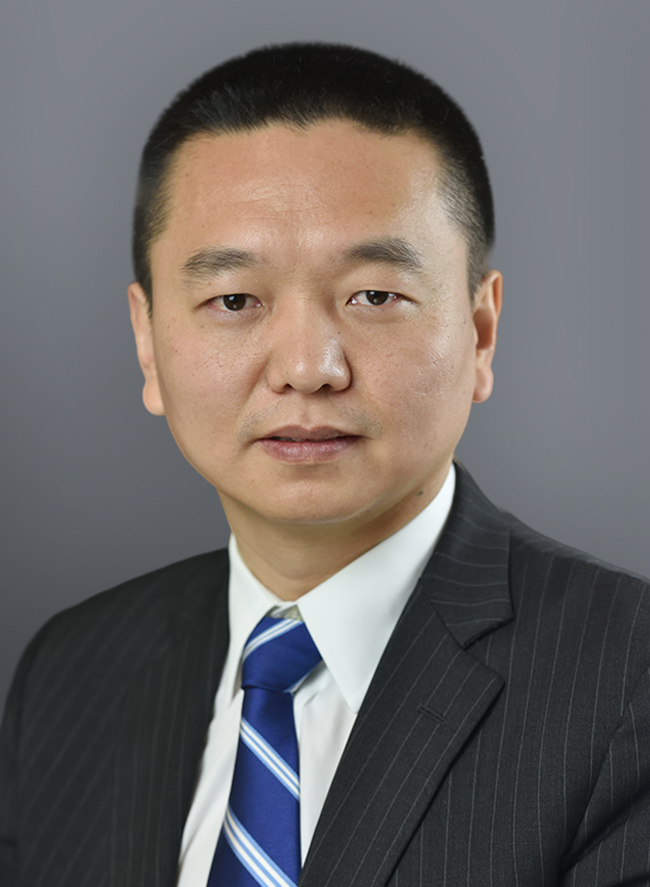
Llinks partner Dr. David Pan was invited to attend the seminar and deliver a keynote speech. Dr. Pan pointed out that the application of artificial intelligence in judicial adjudication improves efficiency through functions such as synchronized generation of electronic case files, courtroom voice assistants, and intelligent evidence management, while promoting "consistent adjudication of similar cases" through features like case recommendation and judgment deviation warnings. On the other hand, the "black box of algorithms" may erode procedural justice, and biased training data or designers' subjective biases could lead to algorithmic discrimination. In essence, the integration of AI into judicial adjudication is not merely the application of new technology but a paradigm shift—from a purely human-centered approach to a human-machine collaborative model in the judicial field. Dr. Pan proposed guiding AI to become a tool for judicial justice through data standardization, the creation of a legal community including judges and lawyers, and the establishment of explainable and accountable algorithms.
During the keynote speech session, Chunhui Wang from Zhejiang University, Hongxing Cao, Overall Project Consultant of the Smart Justice Research Institute at Shanghai Jiao Tong University, and Xuzhi Han, Deputy Director of the Digital Rule of Law Research Institute at East China University of Political Science and Law, delivered keynote speeches on the foundational projects of digital court construction, the application of AI technology in judicial adjudication, and the legislative framework for AI-related systems, respectively. Subsequently, participating scholars and experts engaged in a roundtable discussion, followed by an academic summary by Li Yang, Executive Vice President of the Smart Justice Research Institute at Shanghai Jiao Tong University.